
Category
SRE
Hit by the Chaindrop npm worm? How Hyground helps you contain and disinfect it
The Chaindrop npm worm, the newest strain in the Shai-Hulud family, runs on install and steals every credential the build can reach. Here is how a team already running Hyground scopes the exposure, proves whether it executed, and rotates what it touched, with every destructive fix behind human approval.
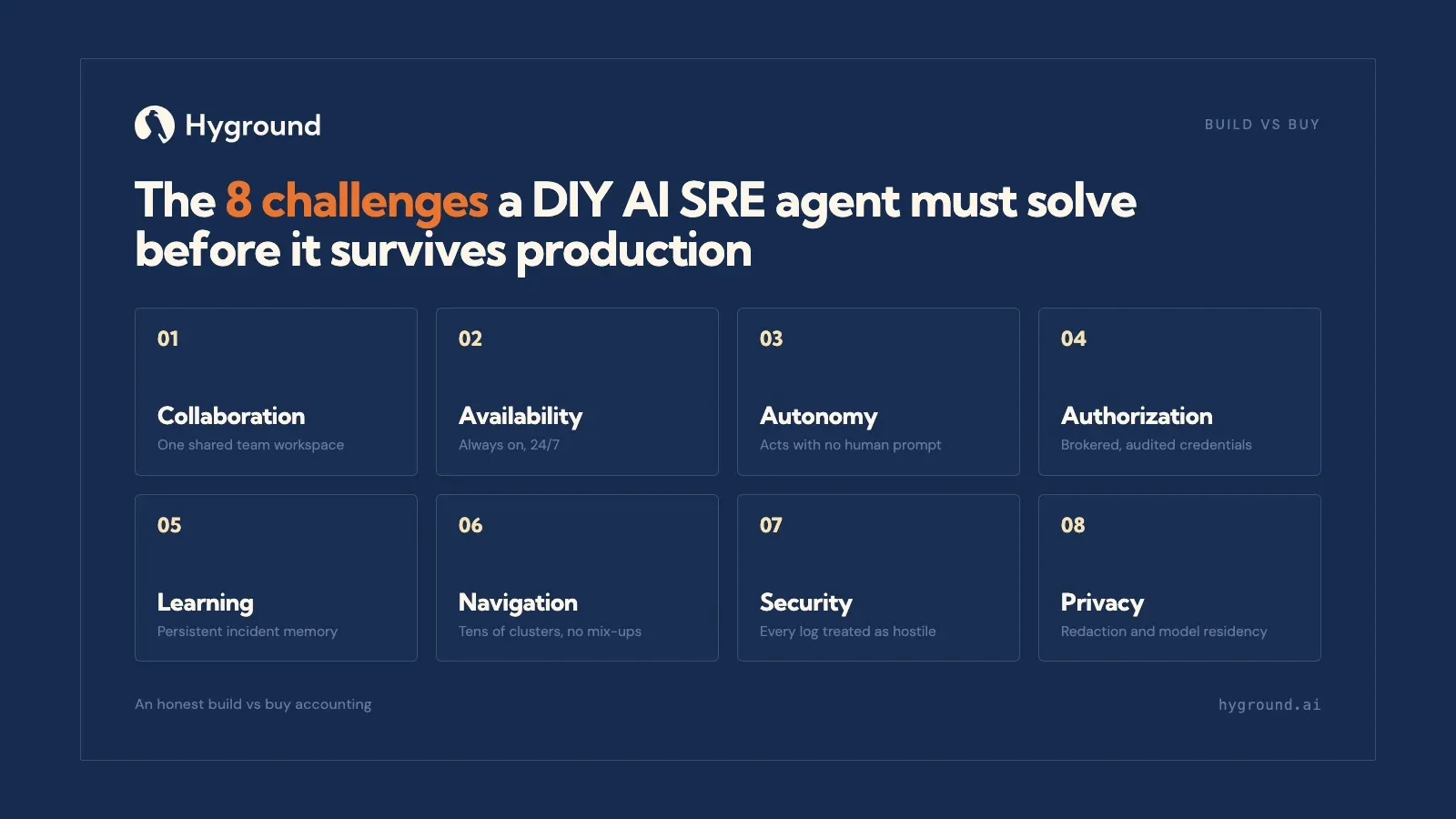
How complex is it to build your own AI SRE agent?
A working demo takes a weekend. A production-grade AI SRE agent your on-call team trusts is roughly 5 to 7 senior engineers for a year to a credible first version, plus a permanent team to keep it there. An honest build vs buy accounting of what the demo hides.
Can You Trust AI to Resolve Production Incidents?
Executives say they trust AI agents to act during incidents. The engineers on call mostly don't. This post sides with the engineers, then walks through the architecture that makes the trust question smaller: read-only defaults, evidence-linked findings, approval-gated writes, and an audit trail.
Are AI SRE Agents Useful or Just Hype?
AI SRE agents are simultaneously overhyped and genuinely valuable: an agent that runs its own investigation and links every finding to checkable evidence is useful, while a tool that just summarizes the dashboards you already had is hype. Here is how to tell them apart before you buy, with Gartner and SRE Report evidence for both sides.

Five OWASP hurdles for your AI SRE
Twenty OWASP risks, but for an AI SRE agent they can be collapsed into five hard hurdles between a working demo and production you can trust.
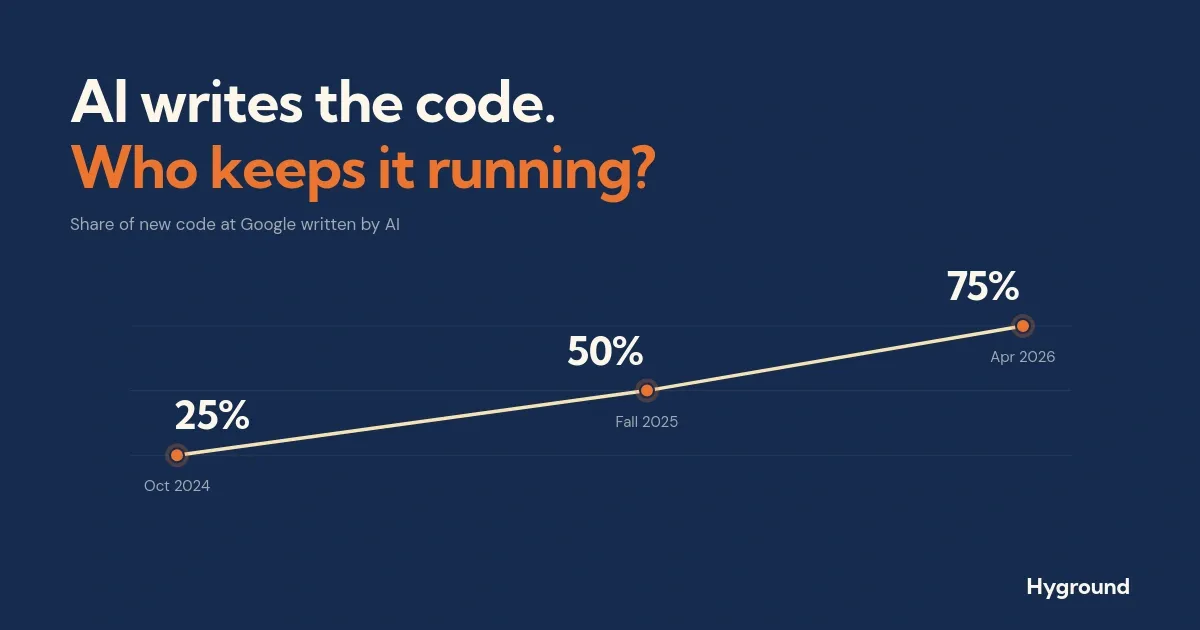
What is an AI SRE?
An AI SRE is an autonomous, LLM-powered agent that triages alerts, investigates incidents, and finds root causes across production systems without step-by-step human direction. The role is emerging just as AI-generated code pushes operational toil to its first rise in five years. What AI SREs do, where they run, and how to evaluate one.

What the OWASP Top 10 for Agentic Applications Means for AI SRE Agents
OWASP's Top 10 for Agentic Applications is the threat model for AI agents in production systems. Here is what each of the ten risks means for an AI SRE agent.

What OWASP LLM Top 10 Means for AI SRE Agents
OWASP's LLM Top 10 turns from an abstract risk list into a concrete architecture spec the moment you put an AI agent inside your operations loop.
 6 min readSRE
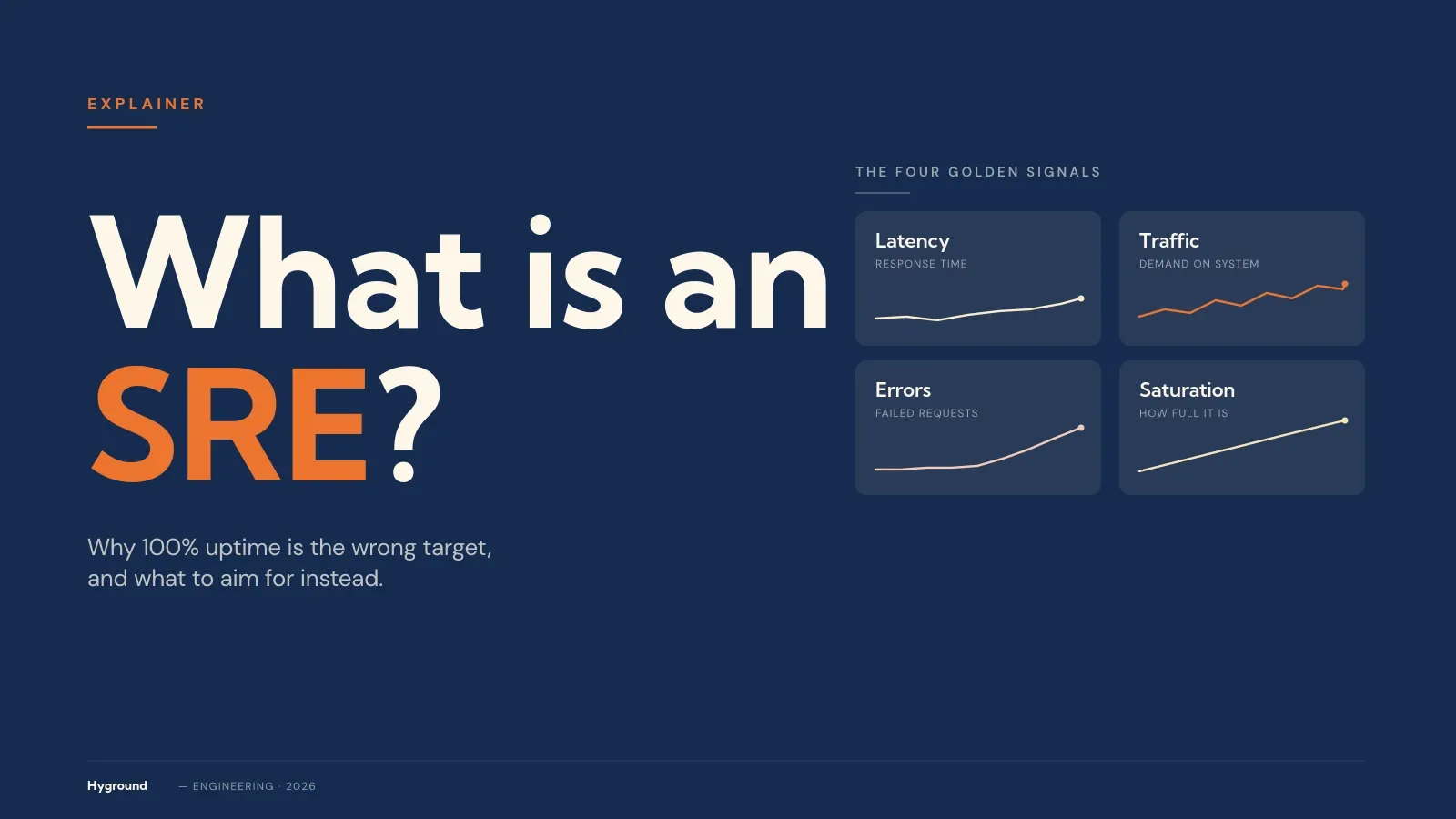
What is an SRE?
A Site Reliability Engineer (SRE) is a software engineer who designs and operates production systems using code, measurement, and automation rather than manual operations. The role was created at Google in 2003 and is now one of the most in-demand titles in software. What SREs do, and how the role differs from DevOps.
Top 10 AI SRE Tools in 2026 Comparison
Ten leading AI SRE tools in 2026, scored on what procurement actually asks: where data lives, what the agent can touch, who owns the LLM.

What an SRE Agent Can Do For Testers
Testers lose hours chasing bugs that turn out to be mismatched deploys, conflicting integrations or broken infrastructure. Hyground's SRE Agent gives you the environmental clarity to know whether your next test session will actually produce trustworthy findings, before you start.

Claude Code Is Not an SRE Agent
AI is great at observing production systems but can't replace SREs because root cause analysis requires system history, institutional knowledge, and human judgment that models lack.

The AI Treadmill: Why Keeping Up Is the Real Engineering Challenge
Effective operations require specialized, secure, and centralized agent architectures rather than risky local execution.
 5 min readSRE
Observability Won't Save You at 3 A.M
Shifting focus from 'full visibility' to automated reasoning and actionability reduces the manual burden on engineers.
 7 min readSRE
The Silent Killer of Your Engineering Culture: Why the 3 AM Call Destroys More Than Just Sleep
Anticipatory stress and poor incident context create a toxic cycle of brain drain and high recruiting costs.

Agentic Behavior: How to Build Reliable AI Agents for Operations
Successful investigation requires autonomous agents that reason and adapt through iterative loops.